Wednesday, July 7, 2010


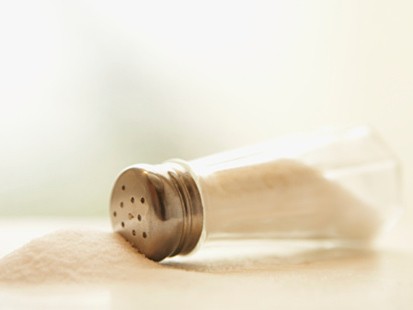
Salt


I eat way too much salt. I’ve always eaten too much salt. People have always told me that—except my Dr. My blood pressure is normal, no cholesterol problems, and I’ve never been on a prescription drug other than an anti-biotic of some kind.


We use only “purified salt.” You can buy it from various sources; I buy it in 20 lb. containers because I use a lot of it in curing meats and sausage making. Kosher Salt and Pickling salt are also “purified,” that is, it is 100% salt. It doesn’t contain fructose, iodine, anti-caking agents, sand, heavy metals or anything other than pure salt.


If you haven’t read the Ingredients on your salt container, you might be surprised.


Sea Salt? I’ve seen ads for very expensive, exotic sea salt from the China Sea. I have to wonder what kind of heavy metals salt from the China Sea might contain. Or what heavy metals are in any sea salt? I’m not saying there are, I just believe they must be there.


My daughter served eggs a few weeks ago, and of course she passed the saltshaker. It was an expensive sea salt she had proudly purchased. It was pink, and I had to wonder what made it pink, but that wasn’t the main problem. She hadn’t noticed that it also contained tiny grains of sand that made chewing the salted food very annoying, even if there were only minute amounts of heavy metals present.


Some salt is necessary for a properly functioning body. Fructose, anti-caking, agents and heavy metals are not. Adequate amounts of iodine should be present in a well-rounded diet that includes organically grown vegetables.


I’ll keep eating all the pure salt I want. If I want sugar, sand, sand, anti-caking agents or heavy metals, I’ll have them as a side dish.


Home Made Sausage?

Sausage making is an ancient art. The word “sausage” originally meant, “salted meat.” In the 1400’s, the German Sausage Makers Guild formulated regulations to ensure that sausages were made from decent meat. I won’t quote every item that was banned from use, but typical items on the list included “rotted meat,” and “pustulated meat.” In reading those banned items, one can’t help being disgusted to think that laws had to be passed to preclude such things.

Because it can be highly seasoned and run through a grinder, sausage is susceptible to any number of man-made outrages.

But I love pork sausage and I’m very particular about what my family eats.

There are hundreds of recipes available on-line, from Andouille and Bangers, to Irish Sausage and Weisswurst. Traditional “sausages” are simply sausage meat stuffed into casings. Casings are either natural-usually pork or lamb intestine, or made of emulsified beef hide, called “collagen casings.” Collagen casings are much easier to work with, exactly uniform in size, and can be purchased for hanging in a smoke house, or very thin, to be used only as “fresh,” meaning not smoked. Not everyone has a sausage stuffer. One isn’t needed to be able to enjoy premium quality pork sausage.

The sausage meat is exactly the same, whether stuffed into a casing, or simply made into patties, like hamburger. Any recipe you can find for any sausage you can name is available.

You certainly can make your own recipe according to your own tastes. Whether your sausage is tubular or in a patty, the flavor is the same.
If you buy a pork shoulder butt, grind and season it according to any recipe you like, you’ll never again be satisfied with commercially made sausage.